
Mounts and Hangers Anchored Correctly
TV mounting, art, and mirror hanging in Santa Fe for homes with plaster and older drywall over inconsistent framing
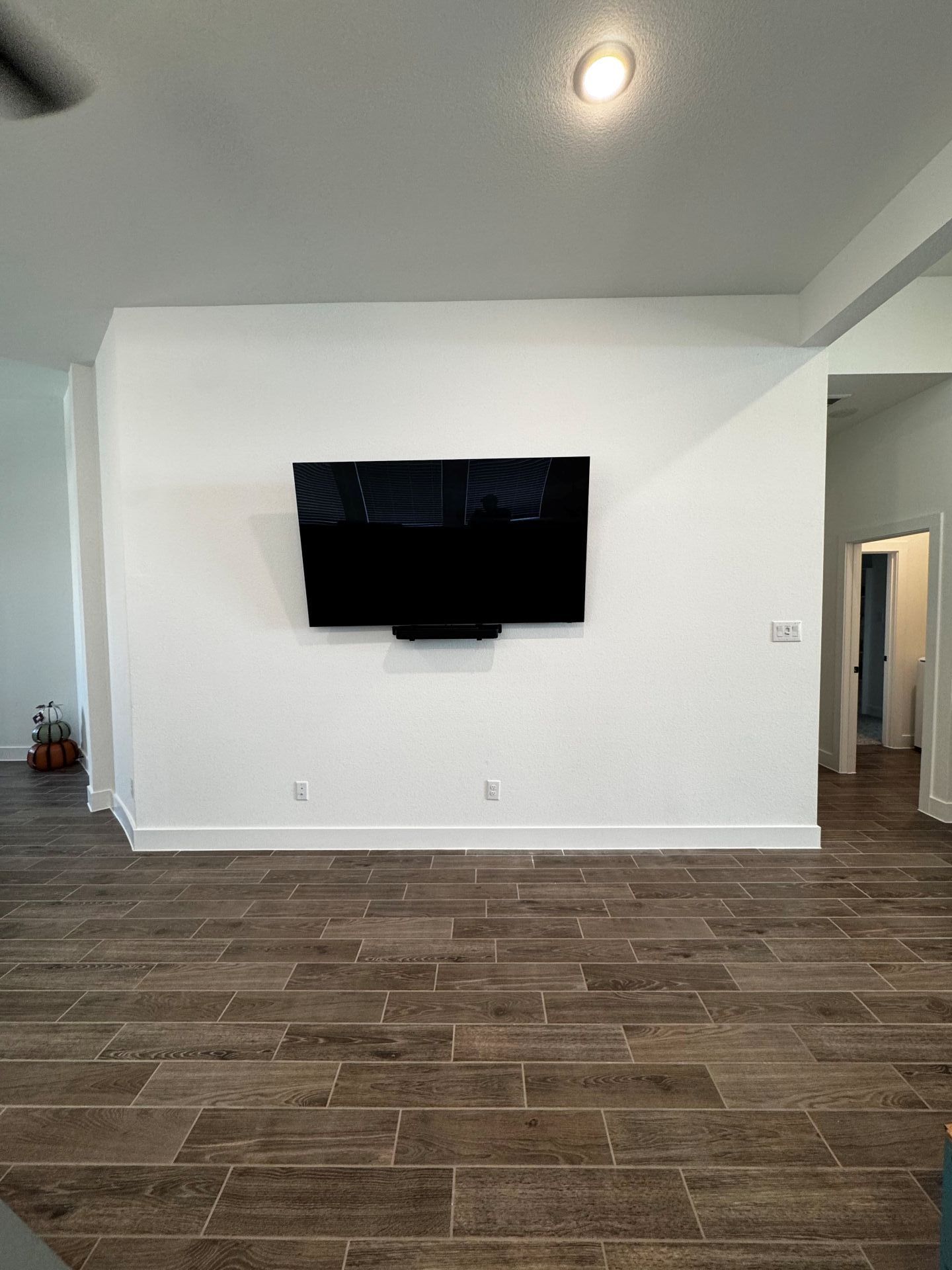
Many homes in Santa Fe and Hitchcock built between the 1970s and 2000s have plaster or older drywall installed over framing that doesn't align with where a TV mount or heavy mirror needs to be anchored, so locating studs and selecting the correct fastener is most of the job. Chavez Home Services mounts TVs and hangs art and mirrors in Santa Fe by anchoring into studs wherever possible, or by using rated wall fasteners designed for the wall type and the weight being supported. The mount is installed securely, cables are routed through the wall or behind the mount where the layout allows, and the work is completed so the TV, art, or mirror sits level and stays in place.
The process begins by locating studs with a stud finder and marking where they fall relative to where the TV or mirror needs to hang, because mounting into drywall alone without backing will fail under load. If studs aren't positioned where the mount needs them, toggle bolts or snap toggles rated for the weight are used instead, and the specific anchor type is selected based on whether the wall is drywall, plaster, or plaster over lath. Cables are run through the wall using a cable management kit if the wall cavity is accessible, or routed behind the mount and down to the outlet if in-wall routing isn't feasible. Mounts and anchors are purchased at the supplier and passed through at cost, with labor quoted separately, and the on-site visit fee is waived when you book the job.
Arrange a mounting consultation to confirm the wall type and the installation approach for your TV, art, or mirror.
What Proper Anchoring Requires in Older Walls
Plaster walls and older drywall don't hold screws reliably without backing, and framing in homes from the 1970s through 2000s was often installed on 24-inch centers or in irregular patterns that don't align with modern TV dimensions or mirror sizes. Mounting into a stud provides the strongest hold, but when studs aren't available where the mount needs to sit, the anchor must be rated for both the wall material and the weight of the item being hung, or it will pull out over time.
After the TV is mounted or the art and mirrors are hung, the item is level, the mount or hanger is firmly anchored and doesn't shift when tested, cables are concealed or organized rather than hanging loose, and you can adjust the TV angle or reposition the artwork without the anchor failing. The installation is stable and looks deliberate, not improvised.
The service includes positioning the TV or artwork at the height you specify, leveling it, and securing it with the appropriate hardware, but it does not include patching walls, repairing damaged plaster, running electrical outlets behind the TV, or mounting items on brick or exterior walls without additional structural assessment.
What Property Owners Ask About the Work
Homeowners preparing to mount a TV or hang heavy artwork typically have specific questions about how the work is done and what hardware is needed.
How do you locate studs in older plaster walls?
A stud finder is used to detect framing behind the plaster, but older lath-and-plaster walls can produce inconsistent readings, so the stud location is confirmed by drilling a small test hole or tapping along the wall to listen for the change in sound.
What type of anchor is used when studs aren't available?
Toggle bolts or snap toggles rated for the wall material and the weight of the TV or mirror are installed, with the specific anchor selected based on whether the wall is drywall, plaster, or plaster over wood lath.
How are cables routed if the wall is plaster?
If the wall cavity is accessible and free of obstructions, cables are fished down to an outlet using a cable management kit, but if the cavity is blocked or filled with insulation, cables are routed behind the mount and along the baseboard.
What height should a TV be mounted at in Santa Fe homes?
The center of the screen is typically mounted at eye level when seated, which is usually 42 to 48 inches from the floor, but the final height depends on your seating arrangement and whether the mount tilts.
What happens if the wall material can't support the weight?
You're informed before any anchors are installed, and the installation is either moved to a location where studs are available, or the wall is reinforced with blocking or a mounting board to provide adequate support.
Chavez Home Services also mounts TVs and hangs art and mirrors in League City, Dickinson, Hitchcock, Santa Fe, and Galveston. Contact Chavez Home Services to schedule a mounting visit and confirm the wall conditions and hardware
requirements for your installation.